
陕西外国人考中国驾照英语版
2026年科目一英文版题库共973题,你可以免费查看随机20题,完整版题库请添加微信购买:

The English version of the 2026 subject 1 question bank has a total of 973 questions. You can view the top 20 questions for free. Please add WeChat to purchase the complete version of the question bank.
1. A motorized vehicle is not allowed to stop in the section 50 meters to the intersection.
Answer: Y
2. When encountering an ambulance rushing in the same lane in the opposite direction, the driver should ________.
A. Move to the road side, reduce speed or stop to yield
B. Drive on by using another lane
C. Speed up and change lane to avoid
D. Continue to go in the original lane
Answer: A
3. When a tire blows out suddenly on the road, the driver should refrain from violently depressing the brake pedal in panic. Instead, he should try his best to shift the gear to a low position and use the engine braking to reduce the speed of the vehicle.
Answer: Y
4. A driver may drive on the road a motorized vehicle overhauled which has reached the scraped standard.
Answer: N
5. When starting up a vehicle stopping at the roadside, the driver should first ________.
A. Depress the accelerator pedal and start
B. Honk
C. Increase engine rotation speed
D. Observe the conditions around the vehicles
Answer: D
6. When encountering children on the road, the driver should _________.
A. Reduce speed and go slowly, or stop to yield when necessary
B. Continuously honk to urge
C. Swiftly bypass from one side
D. Speed up and bypass
Answer: A
7. What is the max speed limit on this road?
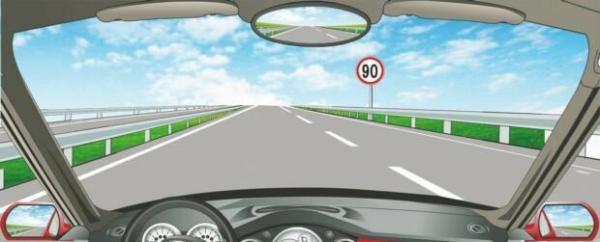
A. 100 km/hr
B. 90 km/hr
C. 120 km/hr
D. 110 km/hr
Answer: B
8. A driver can park the vehicle by borrowing the sidewalk if he cannot find the parking area.
Answer: N
9. Is there any effective auxiliary method to control the speed while driving on a long downhill road besides braking.
A. Shift to the neutral gear and slide
B. Use the engine to brake
C. Turn off the engine and slide
D. Depress the clutch and slide
Answer: B
10. Speeding up to go though the intersection before the light turns to red in this case.
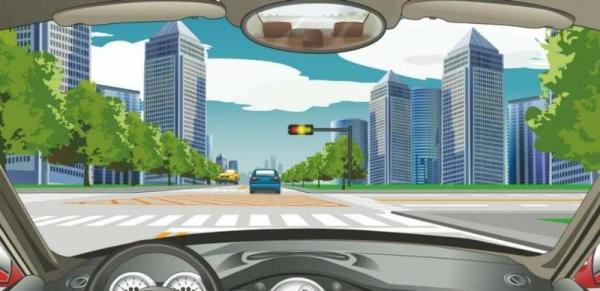
Answer: N
11. No U turn at this section.
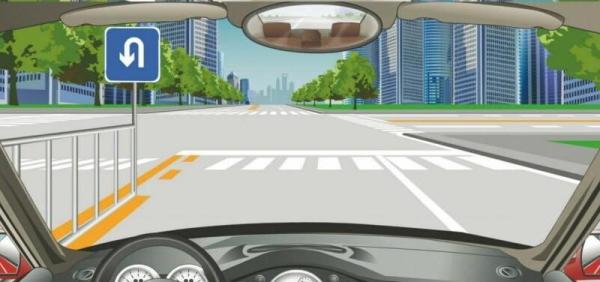
Answer: N
12. Which is subject to a 6-point penalty?
A. violate the traffic lights
B. drive school bus without qualification
C. drive the vehicle which permission is different
D. drive after drink
Answer: A
13. When encountering a traffic jam on the expressway, the driver should follow the front vehicle lining up, and immediately turn on the hazard light to prevent rear-end collision.
Answer: Y
14. The main impact of the road conditions in icy and snowy weather is ______.
A. The electric equipment can easily get wet and cause short circuit
B. The visibility is lower and the field of vision is blurred
C. The resistance to the vehicle increases
D. Poor braking performance and Side pulling
Answer: D
15. When driving a motorized vehicle uphill, you should speed up and honk when you going to reach the top of the slope.
Answer: N
16. In this case, by the right side of the bus lane to overtake.
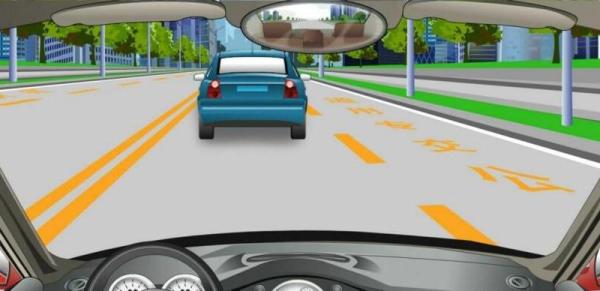
Answer: N
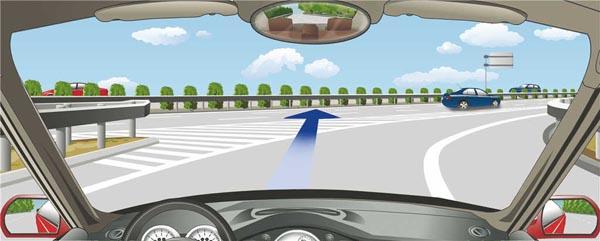
17. You can drive directly into the expressway from this position.
Answer: N
18. A motorized vehicle driver is not allowed during the period of probation to pull a trailer.
Answer: Y
19. When driving in a foggy day, the driver should turn on ______.
A. The reverse light
B. The low beam light
C. The fog light
D. The high beam light
Answer: C
20. Stopping temporarily on the road should not obstruct the passing of other vehicles and pedestrians.
Answer: Y
Previous: 驾考英文题口诀大全图解及答案
Next: 乌鲁木齐外国人考中国驾照英语版