
科目四英文题库及答案
2026年科目四英文版题库共700题,你可以免费查看随机20题,完整版题库请添加微信购买:

The English version of the 2026 subject 4 question bank has a total of 700 questions. You can view the top 20 questions for free. Please add WeChat to purchase the complete version of the question bank.
1. Under such circumstances, what should be done by the motor vehicle driver?
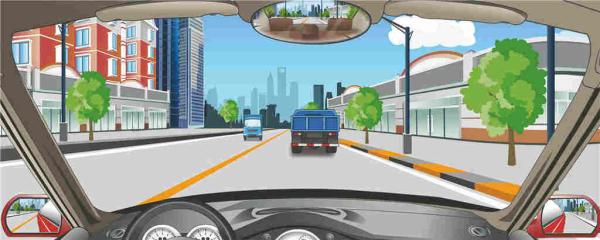
A. Overtaking the vehicle in front on its left
B. Overtaking by occupying the opposite lane
C. Overtaking the vehicle in front on its right
D. Following the vehicle in front
Answer: D
2. Mr. Yang drove an adapted minibus (capacity 9 people and carrying 64 passengers, including 62 kindergarten pupils). When driving in Ma Caogou Village of Yu Linzi County, the bus used the lane for oncoming traffic and had a head-on colision with a heavy dump truck. As a result of this accident, 22 people were killed and 44 injured. What are the main illegal acts in this case?
A. The truck exceeded the speed limit
B. Illegal adaptation of a motor vehicle
C. The minibus carried more passengers than capacity
D. Driving in the opposite direction lane
Answer: BCD
3. When a motor vehicle temporarily stops at night, which lamp should be turned on?
A. Front and rear fog lamp, clearance lamp and rear position lamp
B. Head lamp, clearance lamp and rear position lamp
C. Hazard lamp, clearance lamp and rear position lamp
D. Reverse lamp, clearance lamp and rear position lamp
Answer: C
4. When encountering this situation in a residential area the driver should speed up and pass in front of the bicycle.
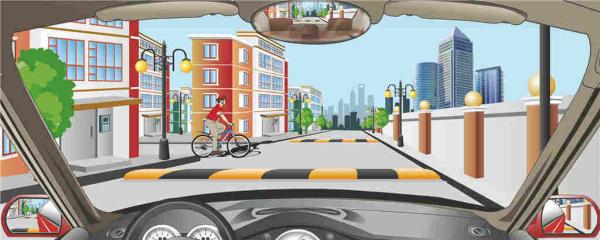
Answer: N
5. When a motor vehicle equipped with ABS makes an emergency brake, the driver can tread the brake pedal heavily.
Answer: Y
6. If the road condition behind is good, motor vehicle drivers should reverse rapidly.
Answer: N
7. Motor vehicle drivers may reverse at an intersection.
Answer: N
8. When driving, besides paying attention to keeping a safe distance from the vehicle in front, drivers should also be prudent when braking so as to avoid a rear-end collision caused by a vehicle behind.
Answer: Y
9. Motor vehicle drivers should use the windscreen wiper when setting off on a rainy day
Answer: Y
10. As shown in the flash, the actions of the driver are correct.
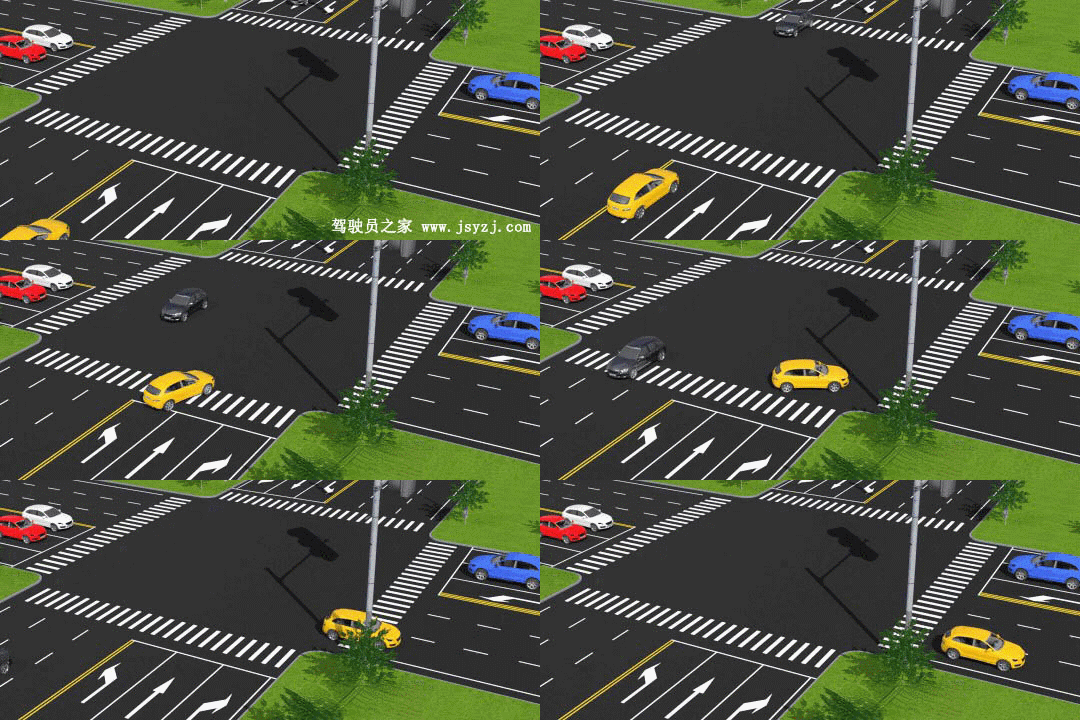
Answer: N
11. Motor vehicles are prohibited from driving straight or turning left in this situation.
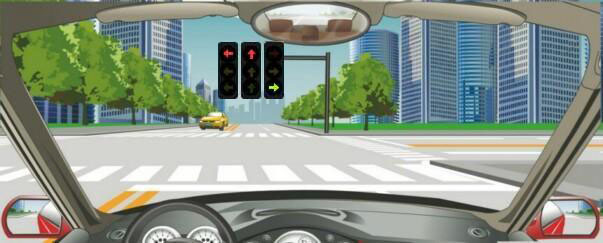
Answer: Y
12. Which of the following is a safe way for motor vehicles to pass the intersection marked with this sign?
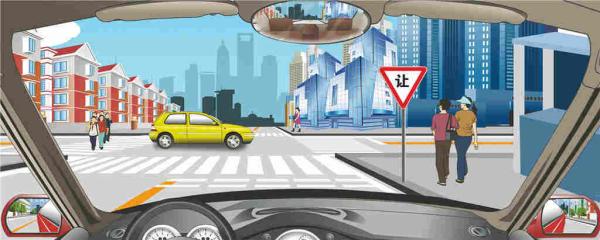
A. Stop and observe the traffic situation around the intersection
B. Approach the intersection by speeding up
C. Observe the traffic situation on the left rear side
D. Approach the intersection at a reduced speed
Answer: D
13. Motor vehicles are not allowed to reverse in a tunnel.
Answer: Y
14. After setting off from a roadside, motor vehicle drivers should watch both sides of the road, turn left and drive into the normal lane slowly.
Answer: Y
15. How many kinds of law-breaking acts are displayed in flash 3?

A. One
B. Two
C. Three
D. Four
Answer: B
16. How should the driver use vehicle lights when the motor vehicle enters this intersection?
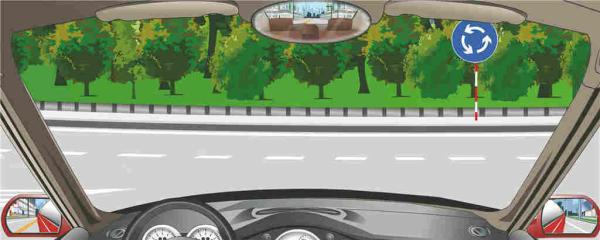
A. Turn on the right-turn indicator
B. Turn on the hazard lamps
C. No need to turn on any indicators
D. Turn on the left indicator
Answer: C
17. A motor vehicle should slow down and stop at this level crossing.
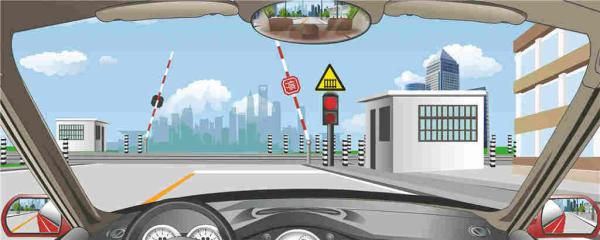
Answer: Y
18. When a motor vehicle temporarily stops in fog, which lamp should be turned on?
A. Hazard lamp, clearance lamp and rear position lamp
B. Left-turn indicator, clearance lamp and rear position amp
C. Headlamp, clearance lamp and rear position lamp
D. Reverse lamp, clearance lamp and rear position lamp
Answer: A
19. Motor vehicle drivers may borrow a special lane for other vehicle types, if one exists, to overtake.
Answer: N
20. In this driving condition, drivers should turn on the high-beam when setting off.

Answer: N
Previous: 红河境外驾照换领中国驾照
Next: 科目四英文版题目有哪些内容