
国外驾照换国内驾照流程临沧
2026年科目一英文版题库共973题,你可以免费查看随机20题,完整版题库请添加微信购买:

The English version of the 2026 subject 1 question bank has a total of 973 questions. You can view the top 20 questions for free. Please add WeChat to purchase the complete version of the question bank.
1. If a front tire blowout has caused a turn in direction, the driver should not avoid excess adjustment. Instead, he should control the direction of the vehicle, ____, and slowly reduce the speed of the vehicle.
A. Apply emergency braking
B. Use the handbrake
C. Gently depress the brake pedal
D. Swiftly depress the brake pedal
Answer: C
2. A driver can park the vehicle by borrowing the sidewalk if he cannot find the parking area.
Answer: N
3. What kind of behavior of this driver violates the law?
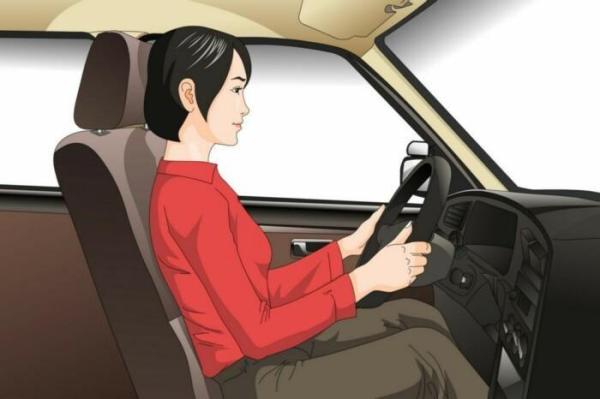
A. not hold the steering wheel according to regulation
B. angle of the seat is not correct
C. not buckled up
D. the driving posture is incorrect
Answer: C
4. Which illegal conduct is subject to a 12-point penalty
A. violate traffic lights
B. use falsified license plate
C. call or answer the mobile phone
D. violate prohibitive signs
Answer: B
5. A motorized vehicle driver who deliberately covered or stained the license plate and placed the license plate unproperly, is subject to a ________.
A. 2-point penalty
B. 3-point penalty
C. 6-point penalty
D. 12-point penalty
Answer: D
6. Reducing the speed when driving in sand, hail, rain, fog, ice and other weather conditions.
Answer: Y
7. When driving at night, the drivers visibility range becomes shorter and his observation becomes poorer. At the same time, the driver can easily become tired because he has to highly concentrate his attention.
Answer: Y
8. You can make an U turn at this intersection.
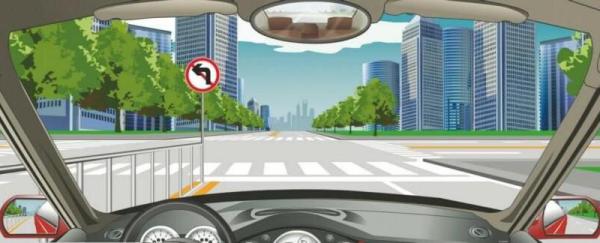
Answer: N
9. Driving a small passenger vehicle on the expressway, the minimum speed should not be less than 90 kilometers per hour.
Answer: N
10. A driver may drive on the road a motorized vehicle overhauled which has reached the scraped standard.
Answer: N
11. The vehicles should run by the right shoulder of an expressway.
Answer: N
12. The traffic lights allow the vehicle to ______
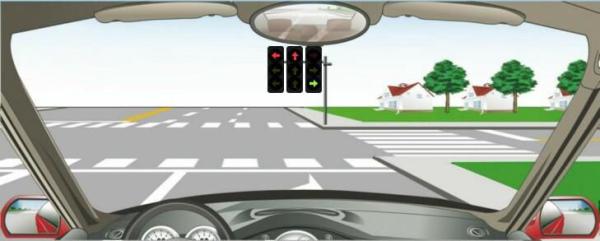
A. turn right
B. stop and wait
C. turn left
D. go straight
Answer: A
13. Traffic markings are divided into indication, warning and prohibition.
Answer: Y
14. When reversing on an ordinary road and discovering some vehicles are passing, the driver should _________.
A. Honk to indicate the intention
B. Voluntarily stop and yield
C. Speed up and reverse
D. Continue to reverse
Answer: B
15. A motorized vehicle driver is not allowed during the period of probation to pull a trailer.
Answer: Y
16. When encountering disabled people obstructing the traffic, the driver should voluntarily reduce speed and yield.
Answer: Y
17. When driving a motorized vehicle uphill, you should speed up and honk when you going to reach the top of the slope.
Answer: N
18. Which is subject to a 6-point penalty?
A. violate the traffic lights
B. drive school bus without qualification
C. drive the vehicle which permission is different
D. drive after drink
Answer: A
19. Registration alternation is not needed when _____
A. change engine
B. add anti-collision device
C. change vehicles colour
D. change the chassis
Answer: B
20. Stop the vehicle and observe when reaching the level crossing in this situation.
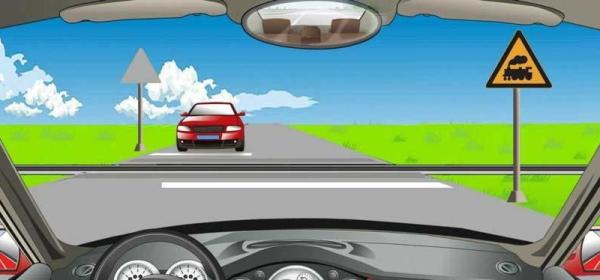
Answer: Y
Previous: 临夏驾考英文版科目一试题
Next: 济宁驾考英文版科目一试题