
柳州外国人考中国驾照英语版
2026年科目一英文版题库共973题,你可以免费查看随机20题,完整版题库请添加微信购买:

The English version of the 2026 subject 1 question bank has a total of 973 questions. You can view the top 20 questions for free. Please add WeChat to purchase the complete version of the question bank.
1. When driving at night, the drivers observation ability is visibly poorer and his visibility range becomes shorter than driving in the daytime.
Answer: Y
2. When a vehicle approaches a crosswalk, the driver should ________.
A. Speed up and pass
B. Stop immediately
C. Honk to indicate the pedestrians to yield
D. Observe the movement of pedestrians and non-motorized vehicles, make sure it is safe before passing
Answer: D
3. Registration alternation is not needed when _____
A. change engine
B. add anti-collision device
C. change vehicles colour
D. change the chassis
Answer: B
4. The main impact of mountain roads on safe driving is _______.
A. The traffic conditions are boring
B. The slopes are long, the curves are sharp and visibility range is shorter.
C. The traffic flow is heavy
D. The road signs are fewer
Answer: B
5. When a vehicle passes a bumped road, the driver should ________.
A. Speed up and dash over under inertia
B. Change to the neutral gear and slide over
C. Maintain the original speed and pass
D. Pass slowly and steadily
Answer: D
6. Stopping temporarily on the road should not obstruct the passing of other vehicles and pedestrians.
Answer: Y
7. If the accumulated penalty points of a motorized vehicle driver reach 12 points and the driver refuses to participate in the study course and also refuses to take tests, it should be publicly announced that his driving license should no longer be used.
Answer: Y
8. You have the priviledged passing right of way at the intersection in this situation.

Answer: N
9. When encountering a vehicle coming in the opposite direction on a mountain road, the driver should ______ when crossing each other.
A. Not reduce speed
B. Stick to the center of the road
C. Speed up
D. Reduce speed or stop to yield
Answer: D
10. When a motorized vehicle breaks down on the expressway, the driver should place a warning sign 50 meters ~ 100 meters in the coming direction.
Answer: N
11. When running on the road having maximum speed limit signs, the motorized vehicle is not allowed to exceed the marked maximum speed.
Answer: Y
12. What is the max speed limit on this road?
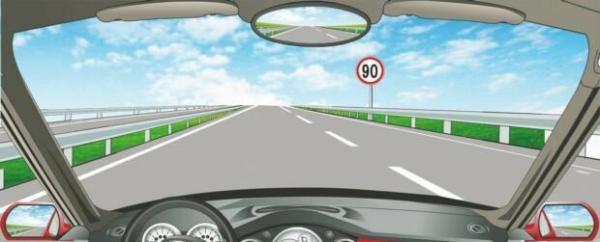
A. 100 km/hr
B. 90 km/hr
C. 120 km/hr
D. 110 km/hr
Answer: B
13. When encountering a traffic accident ahead and help is needed while driving, the driver should ________.
A. Bypass to dodge it as much as possible
B. Immediately report to the police, stop and look on.
C. Help to preserve the scene and immediately report to the police
D. Speed up and pass to ignore it
Answer: C
14. How often should a driver who is more than 60 years old present the certificate of physical conditions?
A. every 3 years
B. every 2 years
C. every 6 months
D. every 1 year
Answer: D
15. Must reduce the frequency of honking in this section.

Answer: N
16. The traffic lights allow the vehicle to ______
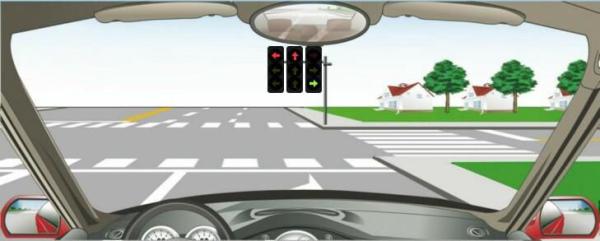
A. turn right
B. stop and wait
C. turn left
D. go straight
Answer: A
17. What is the max speed on muddy road?
A. 15km/hr
B. 20km/hr
C. 40km/hr
D. 30km/hr
Answer: D
18. When a vehicle approaches a bus stopping at a bus stop, the driver should ______ in case the bus starts up suddenly or pedestrians cross in front of the bus.
A. Reduce speed, keep a sufficient distance and be ready to stop anytime
B. Maintain the normal speed
C. Honk to remind, speed up and pass
D. Be ready to apply emergency braking
Answer: A
19. A motorized vehicle driver is not allowed during the period of probation to pull a trailer.
Answer: Y
20. Reducing the speed when driving in sand, hail, rain, fog, ice and other weather conditions.
Answer: Y
Previous: 外国人科目一英文
Next: 英文科目一题目大全图片简单