
驾考英文题目大全及答案
2026年科目一英文版题库共973题,你可以免费查看随机20题,完整版题库请添加微信购买:

The English version of the 2026 subject 1 question bank has a total of 973 questions. You can view the top 20 questions for free. Please add WeChat to purchase the complete version of the question bank.
1. If a vehicle has the right of way at an intersection but encounters a vehicle cutting in, the driver should _________.
A. Rush to pass
B. Speed up in advance and pass
C. Reduce speed and evade, or stop to yield when necessary
D. Go forward at the normal speed according to the right of way and refuses to evade
Answer: C
2. A driver may drive on the road a motorized vehicle overhauled which has reached the scraped standard.
Answer: N
3. Traffic signals include Traffic lights, Traffic signs and Command of the traffic police.
Answer: Y
4. When driving at night on a road with no or poor lighting, the driver should switch from the low beam light to the high beam light. But the vehicle following in the same direction is not allowed to use the high beam light.
Answer: Y
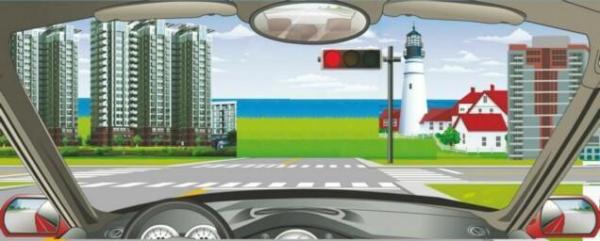
5. At this position, you may speed up to pass through the section.
Answer: N
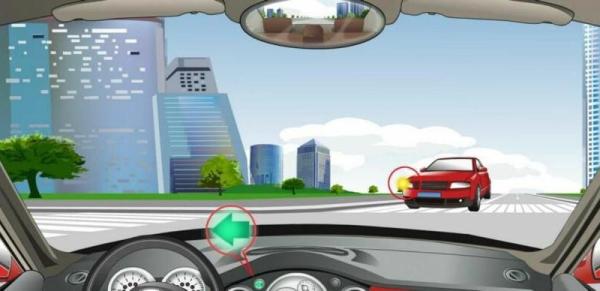
6. You have the priviledged passing right of way at the intersection in this situation.
Answer: Y
7. How to do when causing a minor traffic accident with no human casualties and no dispute?
A. do not move the vehicle
B. counsel other vehicles bypass
C. leave the scene and discuss on their own
D. protect the scene and discuss
Answer: C
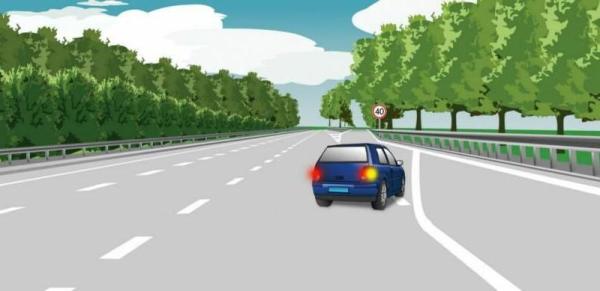
8. The method of this small passenger vehicle to leave the expressway lane is correct.
Answer: Y
9. Motorized vehicles should pass the intersections according to the traffic signals.
Answer: Y
10. When starting up a vehicle stopping at the roadside, the driver should first ________.
A. Depress the accelerator pedal and start
B. Honk
C. Increase engine rotation speed
D. Observe the conditions around the vehicles
Answer: D
11. Traffic markings are divided into indication, warning and prohibition.
Answer: Y
12. When a motorized vehicle breaks down at night, and is difficult to move, the driver should turn on the hazard lights, the contour lights and the tail lights.
Answer: Y
13. When a vehicle goes downhill on a mountain road, it is not allowed to overtake.
Answer: Y
14. The vehicles should run by the right shoulder of an expressway.
Answer: N
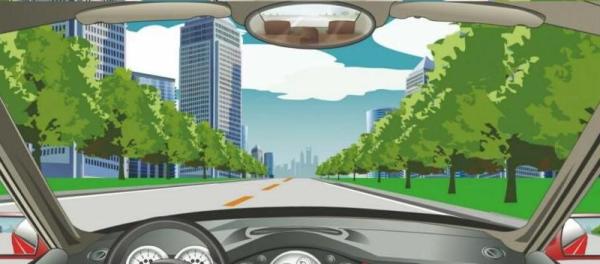
15. A motorized vehicle can make a U turn on this road as long as it does not interfere other vehicles.
Answer: Y
16. In this case, by the right side of the bus lane to overtake.
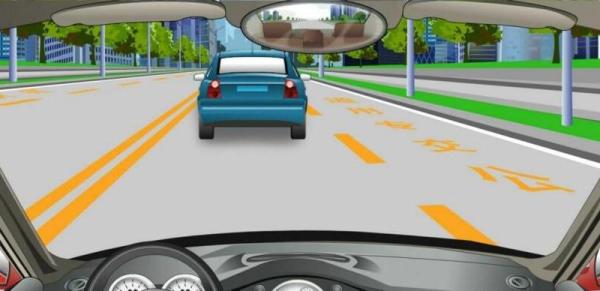
Answer: N
17. The main impact of the road conditions at night on safe driving is ________.
A. The visibility is low and unfavorable for observing road traffic conditions
B. The road surface is complex and changing
C. The physical strength of the driver decreases
D. The driver can easily have impulse and illusion
Answer: A
18. The main impact of the road conditions in icy and snowy weather is ______.
A. The electric equipment can easily get wet and cause short circuit
B. The visibility is lower and the field of vision is blurred
C. The resistance to the vehicle increases
D. Poor braking performance and Side pulling
Answer: D
19. In which situation should a small car driver need check?
A. the end of a scoring cycle
B. change driving license due to expiration
C. fail to reach 12 points in one scoring cycle
D. reach 12 points in one scoring cycle
Answer: B
20. When a vehicle reaches a sharp curve, the driver should _______.
A. Brake suddenly and go slowly
B. Drive along the outer side of the curve
C. Fully reduce speed and drive on the right side
D. Go forward by borrowing the opposite lane
Answer: C
Previous: 莱芜外国人考中国驾照英语版
Next: 喀什境外驾照换领中国驾照