
广元驾考英文版科目一试题
2026年科目一英文版题库共973题,你可以免费查看随机20题,完整版题库请添加微信购买:

The English version of the 2026 subject 1 question bank has a total of 973 questions. You can view the top 20 questions for free. Please add WeChat to purchase the complete version of the question bank.
1. When starting up a vehicle stopping at the roadside, the driver should first ________.
A. Depress the accelerator pedal and start
B. Honk
C. Increase engine rotation speed
D. Observe the conditions around the vehicles
Answer: D
2. The traffic lights allow the vehicle to ______
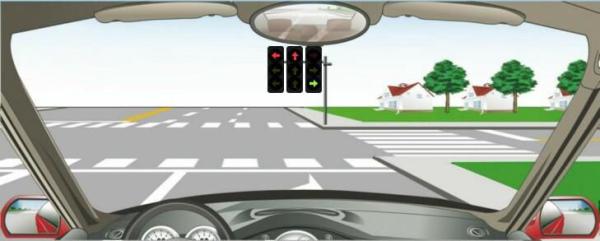
A. turn right
B. stop and wait
C. turn left
D. go straight
Answer: A
3. The reason that a road destroyed by flood affects safe driving and smooth passage is __.
A. The road grip becomes stronger
B. It is impossible to see the hidden holes and bumps in road surface
C. The visibility become lower and blurs the field of vision
D. The sunshine reflection blurs the view
Answer: B
4. A front tire blowout is very dangerous. The vehicle will immediately turn to the side where the tire is blown out and have a direct impact on the drivers control of the steering wheel.
Answer: Y
5. A motorized vehicle driver who deliberately covered or stained the license plate and placed the license plate unproperly, is subject to a ________.
A. 2-point penalty
B. 3-point penalty
C. 6-point penalty
D. 12-point penalty
Answer: D
6. You can make an U turn at this intersection.
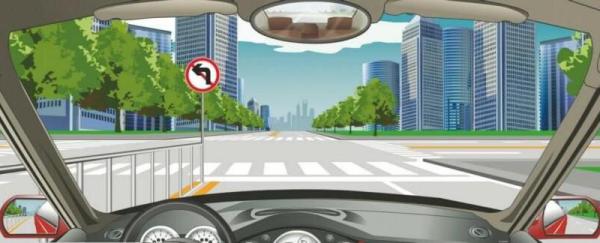
Answer: N
7. How to run through this intersection?

A. honk to let it yield
B. directly speed up to make a turn
C. reduce speed and turn slowly
D. yield the car coming from left
Answer: D
8. If a motorized vehicle driver has caused a major accident in violation of the traffic regulations which has caused serious injury, the driver is subject to a prison term of less than 3 years or a criminal detention.
Answer: Y
9. When a driver needs to borrow a lane to bypass an obstacle in front and a vehicle in the opposite direction is approaching the obstacle, the driver should ___________.
A. Reduce speed or stop and yield to the vehicle coming in the opposite direction
B. Speed up and bypass the obstacle in advance
C. Honk to indicate the vehicle in the opposite direction to yield
D. Rapidly occupy the lane and force the vehicle coming in the opposite direction to stop and yield
Answer: A
10. When passing through an inundated road, the driver should ________.
A. Reduce speed and go slowly
B. Maintain the normal speed and pass
C. slide over in the neutral gear
D. Speed up and pass
Answer: A
11. Driving a motorized vehicle on the road in this condition, the maximum speed can not exceed 50 kilometers per hour.
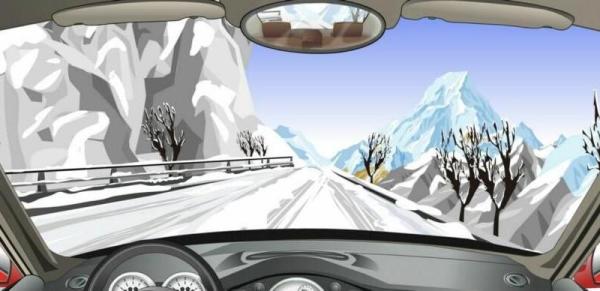
Answer: N
12. When the fire engine, ambulance and wrecker are executing an emergency task, other vehicles should yield.
Answer: Y
13. A motorized vehicle is not allowed to stop in the section 50 meters to the intersection.
Answer: Y
14. Before a motorized vehicle overtakes, the driver should turn on the left-turn signal, use the high and low beam lights alternately or honk in advance.
Answer: Y
15. When a vehicle coming in the opposite direction suddenly overtakes and occupies your lane, the correct way to deal with this situation is to __________.
A. Obstruct the way of that vehicle
B. Maintain the original speed
C. Reduce speed and avoid as much as possible, till stop
D. Speed up and go forward
Answer: C
16. Max speed when pass the narrow road or bridge is _______
A. 50km/hr
B. 40km/hr
C. 30km/hr
D. 60km/hr
Answer: C
17. When a vehicle changes to the right lane, the driver should turn on the right-turn signal in advance, observe and enter the new lane if it is safe to do so.
Answer: Y
18. Traffic Police can detain the driver according to law, if the driver drives a motorized vehicle which is suspected of reaching the write-off standard.
Answer: N
19. When a vehicle approaches a crosswalk, the driver should ________.
A. Speed up and pass
B. Stop immediately
C. Honk to indicate the pedestrians to yield
D. Observe the movement of pedestrians and non-motorized vehicles, make sure it is safe before passing
Answer: D
20. Driving a motorized vehicle in the city road which has no central line, the maximum speed can not exceed 50 kilometers per hour.
Answer: N
Previous: 科目一英文题库网站
Next: 邵阳外国人考中国驾照英语版