
英文版科目一考试题库下载安装官网
2026年科目一英文版题库共973题,你可以免费查看随机20题,完整版题库请添加微信购买:

The English version of the 2026 subject 1 question bank has a total of 973 questions. You can view the top 20 questions for free. Please add WeChat to purchase the complete version of the question bank.
1. After a vehicle enters the ramp, the driver should swiftly increase the speed to more than 60 kilometers per hour.
Answer: N
2. The method of this small passenger vehicle to leave the expressway lane is correct.
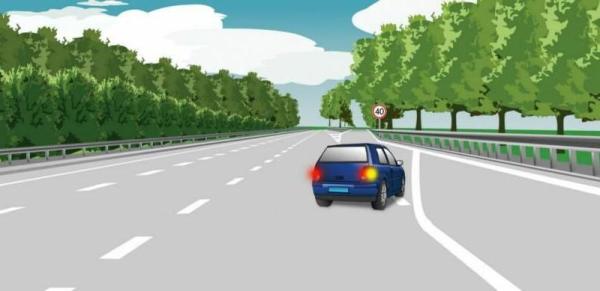
Answer: Y
3. You have the priviledged passing right of way at the intersection in this situation.

Answer: N
4. When a vehicle wades across the water, the driver should maintain a low speed, and _____ the brake pedal so as to restore the braking efficiency.
A. Continuously and strongly depress
B. Intermittently and strongly depress
C. Continuously and gently depress
D. Intermittently and gently depress
Answer: D
5. When driving in a rainstorm and the windscreen wiper cannot totally wipe off the rain water, the driver should ________.
A. Concentrate his attention and drive with care
B. Immediately reduce speed and stop at the road side
C. Maintain the normal speed
D. Drive at a reduced speed
Answer: B
6. When discovering a road congestion ahead, the correct way to deal with this situation is to _______.
A. Continue to weave through
B. Find space and overtake one vehicle after another
C. Honk to indicate the vehicle in front to speed up
D. Stop and wait in line
Answer: D
7. Stop the vehicle and observe when reaching the level crossing in this situation.
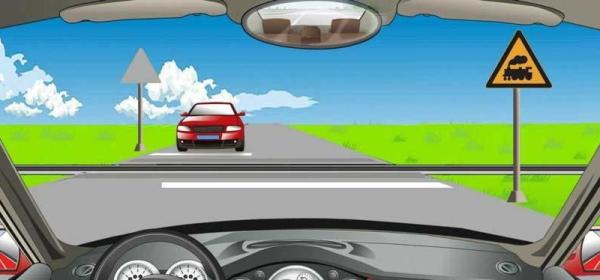
Answer: Y
8. Traffic Police can detain the vehicle according to law if it is without the mandatory traffic accident insurance in accordance with state regulations.
Answer: Y
9. In this case, by the right side of the bus lane to overtake.
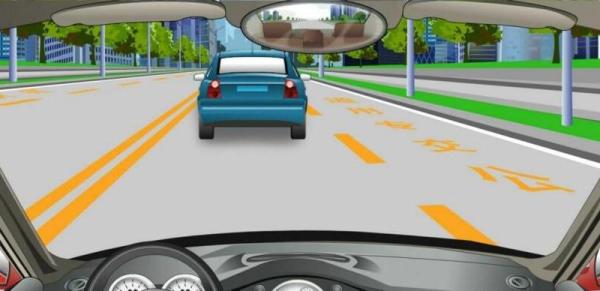
Answer: N
10. When driving in thick or extremely thick fog, the driver should ____ due to low visibility.
A. Turn on the head light and keep driving
B. Turn on the contour light, fog light and drive along the right side
C. Turn on the hazard lights and keep driving
D. Turn on the hazard lights, fog light, and stop at a safe place
Answer: D
11. Traffic signals include Traffic lights, Traffic signs and Command of the traffic police.
Answer: Y
12. When driving in a heavy rain, the driver should control the speed to avoid the danger arising from water slide.
Answer: Y
13. In this case, if it has not begun going up the slope, the vehicle going uphill should yield to the one going downhill.
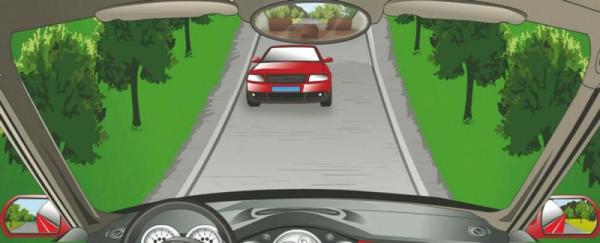
Answer: Y
14. When encountering children on the road, the driver should _________.
A. Reduce speed and go slowly, or stop to yield when necessary
B. Continuously honk to urge
C. Swiftly bypass from one side
D. Speed up and bypass
Answer: A
15. Must reduce the frequency of honking in this section.

Answer: N
16. What kind of behavior of this driver violates the law?
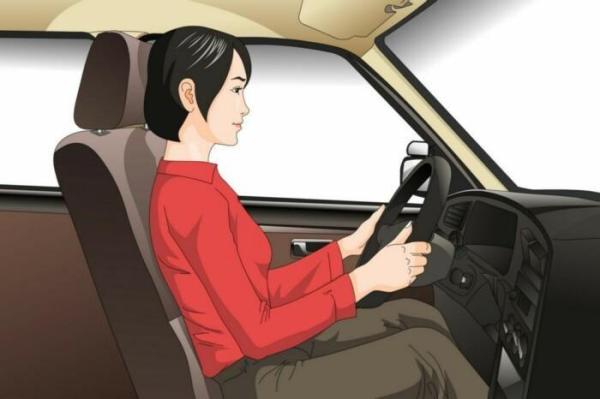
A. not hold the steering wheel according to regulation
B. angle of the seat is not correct
C. not buckled up
D. the driving posture is incorrect
Answer: C
17. It is not safe for a woman driver to wear high heels to drive a vehicle.
Answer: Y
18. When running on the road having maximum speed limit signs, the motorized vehicle is not allowed to exceed the marked maximum speed.
Answer: Y
19. When discovering a vehicle behind wanting to overtake while driving, the driver should _______.
A. Maintain the original speed
B. Reduce speed, observe and run by the right side to yield
C. Speed up and go ahead by the right side
D. Not yield
Answer: B
20. When a vehicle on the main road approaches a conjunction with a feeder road, the driver should ______ in order to prevent a collision with a vehicle that suddenly enters from the feeder road.
A. Maintain the normal speed
B. Reduce speed in advance, observe and drive with care
C. Honk and swiftly pass
D. Speed up in advance and pass
Answer: B
Previous: 阜阳驾考英文版科目一试题
Next: 外国人 科目一 驾照怎么考的