
宣城考摩托车科目四英文版app
2026年摩托车科目四英文版题库共345题,你可以免费查看随机20题,完整版题库请添加微信购买:

The English version of the 2026 Motorcycle subject 4 question bank has a total of 700 questions. You can view the top 20 questions for free. Please add WeChat to purchase the complete version of the question bank.
1. What is the meaning of this sign?

A. Overtaking ban is lifted
B. Changing lane is allowed
C. Changing lane ban is lifted
D. Borrowing lane ban is lifted
Answer: A
2. What is the meaning of this sign?
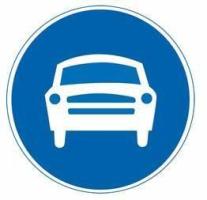
A. No passing for small vehicle
B. Passing for small vehicle only
C. Passing for motorized vehicle
D. No passing for small vehicle
Answer: C
3. When rescuing a person sustaining full-body burns the rescue personnel may spray cool water to his body to put out the fire.
Answer: N
4. What should be done by the driver who intends to overtake but finds that the vehicle in front is also overtaking?
A. Following the vehicle in front closely and finding a chance to overtake it
B. Accelerating to overtake forcefully
C. Continuously sounding the horn to urge the vehicle in front to yield
D. Refraining from overtaking and letting the vehicle in front overtake first
Answer: D
5. What is the meaning of this sign?
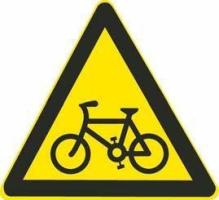
A. The lane for non-motorized vehicles
B. Yield non-motorized vehicles
C. No passing for non-motorized vehicles
D. Watch for non-motorized vehicles
Answer: D
6. What is the meaning of this sign?

A. Continuous down slopes
B. Steep downhill road
C. Steep uphill road
D. Continuous up slopes
Answer: A
7. What is the meaning of this sign?
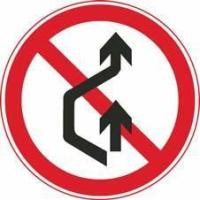
A. No borrowing lane
B. No changing lane
C. No overtaking
D. No U turn
Answer: C
8. What is the meaning of this sign?
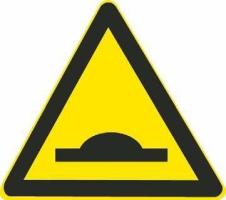
A. Bump road
B. High outburst road
C. Low-lying road
D. Hump bridge
Answer: B
9. What is the meaning of this sign?

A. Slippery section
B. Sharp curve
C. Inverse curve
D. Continuous curves
Answer: C
10. What is the meaning of this sign?
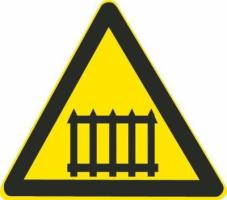
A. A manned level crossing
B. Multi-crossing of railway and road
C. Grade separation level crossing
D. An unmanned level crossing
Answer: A
11. When a wounded person suffering bone fracture in the thigh, shank and spine, it is necessary to keep the fracture in position and refrain to move the wounded person.
Answer: Y
12. What should motor vehicle drivers do when parking temporarily on a rainy day?
A. Turn on hazard lamp
B. Turn on front and back fog lamp
C. Turn on low-beam
D. Set up warning sign at the back of the vehicle
Answer: A
13. What is the meaning of this sign?
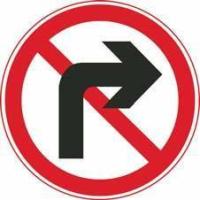
A. No entering the intersection
B. No right turn
C. No changing lane
D. No U turn
Answer: B
14. What should motor vehicle drivers do when approaching an oncoming vehicle on a frozen road?
A. Cut speed as approaching each other
B. Pass each other by speeding up properly
C. Pass each other slowly by cutting speed in advance
D. Pass each other along the central line to the best
Answer: C
15. When encountering an obstacle on one side of the road, what should vehicles do as they approach each other?
A. The vehicle not encountering an obstacle should Yield to the other vehicle
B. The slower vehicle should yield to the faster
C. The vehicle encountering an obstacle should yield to the other vehicle
D. The faster vehicle should yield to the slower
Answer: C
16. How should lamps be used when a motor vehicle meets an oncoming bicycle on a narrow road or a narrow bridge at night?
A. Continuously change between low-beam and high-beam
B. Use clearance lamp
C. Use high-beam
D. Use low-beam
Answer: D
17. How should a motor vehicle follow the other vehicle In front when driving on a road covered with ice and snow?
A. Keep a long safe distance
B. Turn on hazard lamp
C. Change between high-and-low beam alternatively
D. Sound the horn in due time to give a notice to the vehicle in front
Answer: A
18. When the wounded person is suffering main artery bleeding, where should the rescue personnel press by thumb to stop the bleeding?
A. The artery near the heart
B. The artery lower to the wound
C. The artery further from the heart
D. The artery in the center of the wound
Answer: A
19. Gun powder, explosives and detonating powder belong to which of the following dangerous chemicals?
A. Oxidizing materials
B. Inflammable solid materials
C. Explosives
D. Self-igniting articles
Answer: C
20. When there is no bandage for rescuing a wounded person, which of the following measures is wrong?
A. Dress the wounds with a handkerchief
B. Dress the wounds with a towe
C. Dress the wounds with cotton clothes
D. Dress the wounds with string
Answer: D
Previous: 济宁摩托车科目四英文考试题库
Next: 湖北考摩托车科目四英文版app