
郑州摩托车科目四英文试题
2026年摩托车科目四英文版题库共345题,你可以免费查看随机20题,完整版题库请添加微信购买:

The English version of the 2026 Motorcycle subject 4 question bank has a total of 700 questions. You can view the top 20 questions for free. Please add WeChat to purchase the complete version of the question bank.
1. When encountering a vehicle in front ascending on a mountainous road covered with ice and snow, what should the motor vehicle driver do?
A. Ascend after the vehicle in front passes the slope
B. Overtake the vehicle in front swiftly and drive on
C. Overtake the vehicle in front with a slow speed and drive on
D. Follow the vehicle in front closely
Answer: A
2. What is the meaning of this sign?
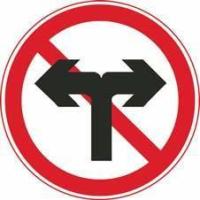
A. No U turn at intersection
B. No changing lane from both sides
C. No left or right turn
D. No going straight
Answer: C
3. When carrying the wounded persons in coma or in danger of suffocation, they should lie face up.
Answer: N
4. When discovering animals crossing the expressway on the highway, the driver should not drastically turn to evade.
Answer: Y
5. Rescue personnel should check the breath of the unconscious person before applying any other emergency treatment.
Answer: Y
6. When the tire pressure is too low, what can happen when driving at a high speed?
A. Tire pressure will be unstable
B. Tire pressure will increase
C. Driving resistance will decrease
D. The tire will burst
Answer: D
7. What should be checked before driving?
A. No parts need to be checked
B. Whether the tires have been cleaned
C. Where the spare tire is placed
D. The fastening and air pressure of tires
Answer: D
8. What is the meaning of this sign?
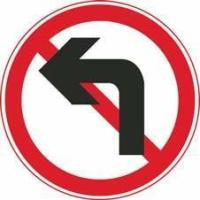
A. No U turn
B. No changing to left lane
C. No turning left
D. No entering the left lane
Answer: C
9. Which of the following measures is correct for rescuing a person sustaining full-body burns?
A. Cover the fire with sandy soil
B. Spray cool water to his body
C. Put out the fire by extinguisher
D. Help to remove the burning clothes
Answer: B
10. When a motor vehicle temporarily stops at night, which lamp should be turned on?
A. Front and rear fog lamp, clearance lamp and rear position lamp
B. Head lamp, clearance lamp and rear position lamp
C. Hazard lamp, clearance lamp and rear position lamp
D. Reverse lamp, clearance lamp and rear position lamp
Answer: C
11. When the wounded person is suffering main artery bleeding, where should the rescue personnel press by thumb to stop the bleeding?
A. The artery near the heart
B. The artery lower to the wound
C. The artery further from the heart
D. The artery in the center of the wound
Answer: A
12. When encountering an obstacle on one side of the road, what should vehicles do as they approach each other?
A. The vehicle not encountering an obstacle should Yield to the other vehicle
B. The slower vehicle should yield to the faster
C. The vehicle encountering an obstacle should yield to the other vehicle
D. The faster vehicle should yield to the slower
Answer: C
13. The wrong method to rescue a poisoned person in a traffic accident is to ______.
A. Bring him to a place where air is fresh
B. Take off clothes that are exposed to toxic air
C. Clean exposed areas with clean water
D. Stay in the original place and wait for the rescue personnel
Answer: D
14. What is the meaning of this sign?
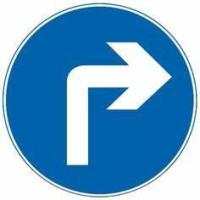
A. Turn right
B. One-way road
C. Going straight only
D. Straight-going lane
Answer: A
15. What is the meaning of this sign?
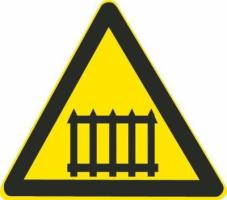
A. A manned level crossing
B. Multi-crossing of railway and road
C. Grade separation level crossing
D. An unmanned level crossing
Answer: A
16. What is the meaning of this sign?

A. No changing lane
B. No left turn
C. No going straight
D. No U turn
Answer: D
17. When following other vehicles on the uphill section of a mountain road, what should the driver do if the vehicle in front stops?
A. Overtake from either side of the front vehicle
B. Stop close to the vehicle in front
C. Stop with a larger space from the vehicle in front
D. Sound the horn continuously to warn the other driver
Answer: C
18. What is the meaning of this sign?

A. Exit and entry for disabled people
B. Watch for disabled people
C. Rest area for disabled people
D. Special passage for disabled people
Answer: B
19. What is the meaning of this sign?

A. Watch for pedestrians
B. Crosswalk
C. Village or town
D. Primary school
Answer: C
20. What influence does smoking have upon driving?
A. Harmful for safe driving
B. Increase concentration
C. Help relaxation
D. No effect on driving
Answer: A
Previous: 红河考摩托车科目四英文版试题
Next: 邵阳外国人在中国考摩托车驾驶证