
济宁摩托车科四英文题
2026年摩托车科目四英文版题库共345题,你可以免费查看随机20题,完整版题库请添加微信购买:

The English version of the 2026 Motorcycle subject 4 question bank has a total of 700 questions. You can view the top 20 questions for free. Please add WeChat to purchase the complete version of the question bank.
1. When rescuing a wounded person in coma, it is necessary to take warm-keeping measures to prevent heat loss.
Answer: Y
2. How will the adhesive force of road change when speed increases on a damp and slippery road?
A. Increase sharply
B. Increase gradually
C. Decrease sharply
D. No change
Answer: C
3. What is the meaning of this sign?
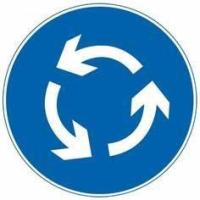
A. Passing by the right side
B. Passing by the left side
C. Running to right side
D. Running the roundabout
Answer: D
4. What is the meaning of this sign?
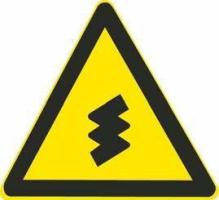
A. Slippery section
B. Sharp curve
C. Inverse curve
D. Continuous curves
Answer: D
5. What is the meaning of this sign?
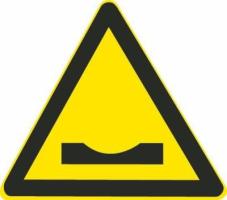
A. Bump road
B. Low-lying road
C. High outburst road
D. Hump bridge
Answer: B
6. How should lamps be used by the motor vehicle driver who follows a vehicle on a road section at night where he street light condition is good?
A. Turn off the headlamp
B. Use high-beam
C. Turn off all lamps
D. Use low-beam
Answer: D
7. What is the meaning of this sign?

A. Stopping temporarily is allowed
B. Long stopping is allowed
C. No long stopping
D. No stopping
Answer: D
8. What should be checked before driving?
A. No parts need to be checked
B. Whether the tires have been cleaned
C. Where the spare tire is placed
D. The fastening and air pressure of tires
Answer: D
9. What is the meaning of this sign?
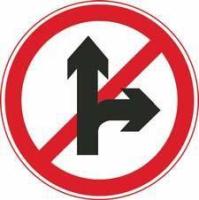
A. No going straight and no changing to left lane
B. No going straight and no left turn
C. Allowed to go straight and change to left lane
D. No going straight and no right turn
Answer: D
10. When removing a wounded person suffering spinal fracture, the rescuer should never help the wounded person to walk. He may be carried away with a soft stretcher.
Answer: N
11. When following other vehicles on a foggy day, what should the driver do?
A. Maintain a large safety distance
B. Turn on the high-beam
C. Turn on the low-bea
D. Sound the horn in due time
Answer: A
12. When two vehicles approach each other on a foggy day, what is the best method of safe driving?
A. Turn on the high-beam
B. Slowdown and maintain a large safety distance
C. Turn on the low-beam
D. Turn on the fog lamp
Answer: B
13. How should lamps be used when a motor vehicle meets an oncoming bicycle on a narrow road or a narrow bridge at night?
A. Continuously change between low-beam and high-beam
B. Use clearance lamp
C. Use high-beam
D. Use low-beam
Answer: D
14. What is the meaning of this sign?

A. No passing
B. Driving at reduced speed
C. Time limit for entering
D. No entering
Answer: A
15. When rescuing a wounded person who has been poisoned by toxic gas, the first measure is to send him to a place where air is fresh so that he will not continue to be poisoned.
Answer: Y
16. When discovering animals crossing the expressway on the highway, the driver should not drastically turn to evade.
Answer: Y
17. What is the most frequent problem for driving on a muddy road?
A. High resistance force
B. Sideways slide
C. The motor vehicle bumps
D. Steering failure
Answer: B
18. When driving on a long downhill road, which is the best way to control driving speed?
A. Coast in neutral gear
B. Depress the clutch and coast
C. Use the engine to brake
D. Depress the brake pedal continuously
Answer: C
19. When an erosive material catches fire, it should not be put out with water cannon.
Answer: Y
20. Dangerous chemicals possess the characteristics of explosion, inflammation, poison, erosion and radiation.
Answer: Y
Previous: 沧州摩托车科目四英文考试题库
Next: 郴州摩托车科目一英文版