
娄底考摩托车科目四英文版电子题库
2026年摩托车科目四英文版题库共345题,你可以免费查看随机20题,完整版题库请添加微信购买:

The English version of the 2026 Motorcycle subject 4 question bank has a total of 700 questions. You can view the top 20 questions for free. Please add WeChat to purchase the complete version of the question bank.
1. Gun powder, explosives and detonating powder belong to which of the following dangerous chemicals?
A. Oxidizing materials
B. Inflammable solid materials
C. Explosives
D. Self-igniting articles
Answer: C
2. How should a motor vehicle follow the other vehicle In front when driving on a road covered with ice and snow?
A. Keep a long safe distance
B. Turn on hazard lamp
C. Change between high-and-low beam alternatively
D. Sound the horn in due time to give a notice to the vehicle in front
Answer: A
3. Matches, sulfur and red phosphorus are _________.
A. Explosives
B. Inflammable solid materials
C. Self-igniting articles
D. Oxidizing materials
Answer: B
4. When following other vehicles on the uphill section of a mountain road, what should the driver do if the vehicle in front stops?
A. Overtake from either side of the front vehicle
B. Stop close to the vehicle in front
C. Stop with a larger space from the vehicle in front
D. Sound the horn continuously to warn the other driver
Answer: C
5. Which of the following measures is correct for rescuing a person sustaining full-body burns?
A. Cover the fire with sandy soil
B. Spray cool water to his body
C. Put out the fire by extinguisher
D. Help to remove the burning clothes
Answer: B
6. What should motor vehicle drivers do when parking temporarily on a rainy day?
A. Turn on hazard lamp
B. Turn on front and back fog lamp
C. Turn on low-beam
D. Set up warning sign at the back of the vehicle
Answer: A
7. When a motor vehicle encounters a burning phenomenon, it should leave the vehicle quickly so as not to cause injury or asphyxia to the respiratory tract.
Answer: Y
8. What is the meaning of this sign?

A. Stop to yield
B. No stopping temporarily
C. No entry
D. No long stopping
Answer: A
9. Which of the following measures is incorrect when a motor vehicle stops?
A. Stop at a stipulated place
B. Avoid stopping on pedestrian streets
C. Avoid obstructing the passing of other motor vehicles and pedestrians when temporarily stops on the road
D. Stop on the non-motor vehicle lane
Answer: D
10. How should lamps be used by the motor vehicle driver who follows a vehicle on a road section at night where he street light condition is good?
A. Turn off the headlamp
B. Use high-beam
C. Turn off all lamps
D. Use low-beam
Answer: D
11. What is the meaning of this sign?

A. Going straight and left turn
B. Going straight and right turn
C. No going straight and no right turn
D. Left turn and right turn only
Answer: B
12. What is the meaning of this sign?
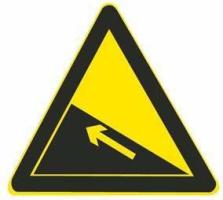
A. Steep downhill road
B. Continuous up slopes
C. Steep uphill road
D. Embankment road
Answer: C
13. The article that cannot be used to stop bleeding by dressing is _________.
A. Bondage
B. Sling
C. Tourniquet
D. Hemp rope
Answer: D
14. What is the meaning of this sign?

A. Overtaking ban is lifted
B. Changing lane is allowed
C. Changing lane ban is lifted
D. Borrowing lane ban is lifted
Answer: A
15. When driving in rain and encountering pedestrians with umbrellas or wearing raincoats, what should be done by motor vehicle drivers in order to yield?
A. Drive at a normal speed
B. Sound the horn to alert when approaching the pedestrians
C. Speed up and bypass on the left
D. Reduce speed and sound the horn in advance
Answer: D
16. When carrying the wounded persons in coma or in danger of suffocation, they should lie face up.
Answer: N
17. What is the meaning of this sign?
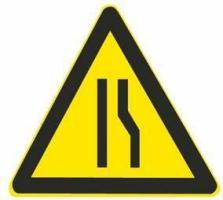
A. Road narrows on both sides
B. Road narrows on the right side
C. Road narrows on the left side
D. Bridge narrows
Answer: B
18. What is the meaning of this sign?
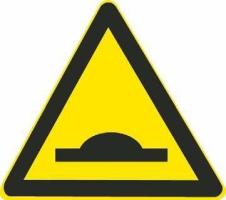
A. Bump road
B. High outburst road
C. Low-lying road
D. Hump bridge
Answer: B
19. What is the meaning of this sign?

A. No long time honking
B. Honk discontinuously
C. Reduce speed and honk
D. No honking
Answer: D
20. How should lamps be used when motor vehicle drivers pass through a two-way tunnel?
A. Turn on the hazard lamps
B. Turn on the high-beam
C. Turn on the fog lamp
D. Turn on the low-beam
Answer: D
Previous: 湖南摩托车科目一英文试题
Next: 巴中考摩托车科目四英文版电子题库