
玉树考摩托车科目四英文题和答案
2026年摩托车科目四英文版题库共345题,你可以免费查看随机20题,完整版题库请添加微信购买:

The English version of the 2026 Motorcycle subject 4 question bank has a total of 700 questions. You can view the top 20 questions for free. Please add WeChat to purchase the complete version of the question bank.
1. When rescuing a wounded person who has been poisoned by toxic gas, the first measure is to send him to a place where air is fresh so that he will not continue to be poisoned.
Answer: Y
2. What is the meaning of this sign?

A. Accident-prone section
B. Construction section
C. Reducing speed and going slowly section
D. Jammed section
Answer: A
3. What is the meaning of this sign?
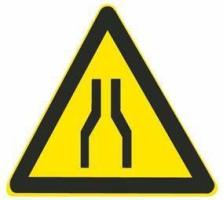
A. Road narrows on both sides
B. Road narrows on the right side
C. Road narrows on the left side
D. Bridge narrows
Answer: A
4. What is the meaning of this sign?
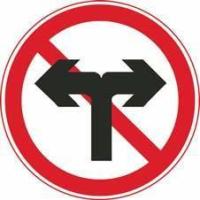
A. No U turn at intersection
B. No changing lane from both sides
C. No left or right turn
D. No going straight
Answer: C
5. When there is no bandage for rescuing a wounded person, which of the following measures is wrong?
A. Dress the wounds with a handkerchief
B. Dress the wounds with a towe
C. Dress the wounds with cotton clothes
D. Dress the wounds with string
Answer: D
6. What is the meaning of this sign?
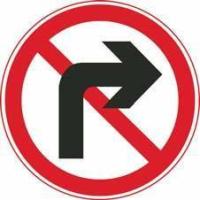
A. No entering the intersection
B. No right turn
C. No changing lane
D. No U turn
Answer: B
7. When using splints, sticks or tree branches to keep the unexposed bones in position, it is necessary that these things should exceed the upper and lower joints of the wound.
Answer: Y
8. What should the driver do when he/she encounters an oncoming ambulance in the same lane?
A. Keep to the side and reduce speed or stop to yield
B. Drive ahead by occupying another lane
C. Yield by speeding up and changing lanes
D. Drive ahead in the original lane
Answer: A
9. What is the meaning of this sign?
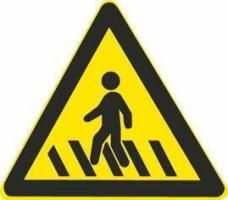
A. Watch for pedestrians
B. Watch for children
C. School area
D. Crosswalk
Answer: A
10. When a motor vehicle temporarily stops at night, which lamp should be turned on?
A. Front and rear fog lamp, clearance lamp and rear position lamp
B. Head lamp, clearance lamp and rear position lamp
C. Hazard lamp, clearance lamp and rear position lamp
D. Reverse lamp, clearance lamp and rear position lamp
Answer: C
11. When putting out a fire disaster that gives out erosive steam or poisonous gas, the firefighters should wear gas masks and other related protective articles and should operate from the windward side.
Answer: Y
12. When a motor vehicle stops in snow, which lamp should be turned on?
A. Front and rear fog lamps, clearance lamp and rear position lamp
B. Reverse lamp, clearance lamp and rear position lamp
C. Headlamp, clearance lamp and rear position lamp
D. Hazard lamps, clearance lamp and rear position lamp
Answer: D
13. What is the meaning of this sign?
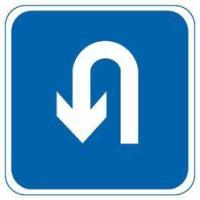
A. U turn
B. Reversing
C. Left turn
D. Bypassing
Answer: A
14. Which of the following measures is incorrect when a motor vehicle stops?
A. Stop at a stipulated place
B. Avoid stopping on pedestrian streets
C. Avoid obstructing the passing of other motor vehicles and pedestrians when temporarily stops on the road
D. Stop on the non-motor vehicle lane
Answer: D
15. What is the meaning of this sign?

A. Slippery section
B. Sharp curve
C. Inverse curve
D. Continuous curves
Answer: C
16. What is the meaning of this sign?
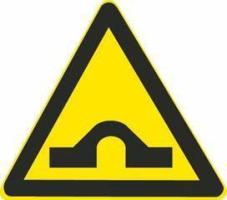
A. Hump bridge
B. High outburst road
C. Low-lying road
D. Bump road
Answer: A
17. The wrong method to rescue a poisoned person in a traffic accident is to ______.
A. Bring him to a place where air is fresh
B. Take off clothes that are exposed to toxic air
C. Clean exposed areas with clean water
D. Stay in the original place and wait for the rescue personnel
Answer: D
18. What is the main impact of foggy weather on safe driving?
A. Easy to slide sideways
B. Low visibility
C. Increase the resistance
D. Widen the field of vision
Answer: B
19. Which lamp should be turned on when motor vehicles pass through a road section at night where the street light condition is good?
A. Front and rear fog lamps
B. Low-beam
C. High-beam
D. Hazard lamp
Answer: B
20. Rescue personnel should check the breath of the unconscious person before applying any other emergency treatment.
Answer: Y
Previous: 呼和浩特摩托车科目一英文版app
Next: 洛阳摩托车科目四英文版app