
131. You can make an U turn at this intersection.
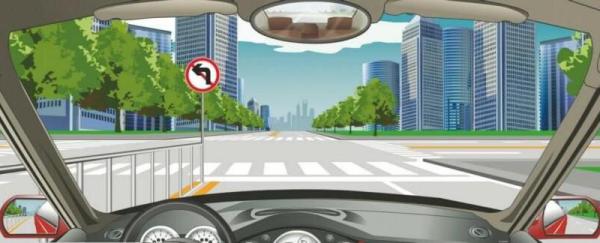
Answer:N
Previous question: 130. Traffic Police can detain the vehicle according to law if it is without the mandatory traffic accident insurance in accordance with state regulations.
2026年科目一英文版题库共973题,你可以免费查看前200题,完整版题库请添加微信购买:

The English version of the 2026 subject 1 question bank has a total of 973 questions. You can view the top 200 questions for free. Please add WeChat to purchase the complete version of the question bank.
Subject 1 test questions
- When a vehicle goes downhill, it may fully use the neutral gear and slide.
- When a vehicle wades across the water, the driver should maintain a low speed, and _____ the brake pedal so as to restore the braking efficiency.
- It is not safe for a woman driver to wear high heels to drive a vehicle.
- When changing lanes on an expressway, the driver should turn on the turn signal in advance, observe the traffic conditions, and slowly turn the steering wheel and enter the new lane after making sure it is safe to do so.
- When reversing on an ordinary road and discovering some vehicles are passing, the driver should _________.
- When driving in a foggy day, the driver should turn on ______.
- Before entering a level crossing, the vehicle should reduce speed and change to a lower gear, and _____ after entering the level crossing.
- How often should a driver who is more than 60 years old present the certificate of physical conditions?
- When a vehicle encounters a bike rider coming in the opposite direction on the road, the driver should _________.
- When encountering a vehicle coming in the opposite direction on a mountain road, the driver should ______ when crossing each other.
- Registration alternation is not needed when _____
- The main impact of mountain roads on safe driving is _______.
- A driver can park the vehicle by borrowing the sidewalk if he cannot find the parking area.
- When running on an expressway, the driver should ____ if he has missed the exit.
- When driving in thick or extremely thick fog, the driver should ____ due to low visibility.
- At this position, you may speed up to pass through the section.