
192. In this case, if it has not begun going up the slope, the vehicle going uphill should yield to the one going downhill.
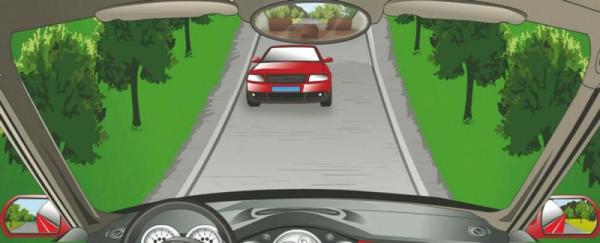
Answer:Y
Previous question: 191. Driving a motorized vehicle in the city road which has no central line, the maximum speed can not exceed 50 kilometers per hour.
Next question: 193. This motorized vehicle parked on the roadside has no illegal act.
2026年科目一英文版题库共973题,你可以免费查看前200题,完整版题库请添加微信购买:

The English version of the 2026 subject 1 question bank has a total of 973 questions. You can view the top 200 questions for free. Please add WeChat to purchase the complete version of the question bank.
Subject 1 test questions
- When a vehicle on the main road approaches a conjunction with a feeder road, the driver should ______ in order to prevent a collision with a vehicle that suddenly enters from the feeder road.
- When starting up a vehicle stopping at the roadside, the driver should first ________.
- When there is a continuous rain, the shoulders of the mountain roads may become loose and the embankments may collapse. When driving in this weather, the driver should select the middle solid road and refrain from going close to the roadsides.
- Which is subject to a 6-point penalty?
- When a vehicle running at night encounters a curve ahead, its lighting ____.
- In this case, if it has not begun going up the slope, the vehicle going uphill should yield to the one going downhill.
- A motorized vehicle is not allowed to make a U turn at the level crossing, bridge, steep slope, tunnel or dangerous road section.
- When reversing on an ordinary road and discovering some vehicles are passing, the driver should _________.
- Motorized vehicles should pass the intersections according to the traffic signals.
- When a vehicle approaches a crosswalk, the driver should ________.
- Max speed when pass the narrow road or bridge is _______
- When driving a motorized vehicle uphill, you should speed up and honk when you going to reach the top of the slope.
- When a vehicle passes a bumped road, the driver should ________.
- When encountering an ambulance rushing in the same lane in the opposite direction, the driver should ________.
- A motorized vehicle is not allowed to stop in the section 50 meters to the intersection.
- Which is correct if a vehicle breaks down and is difficult to move?