
50. The method of this small passenger vehicle to leave the expressway lane is correct.
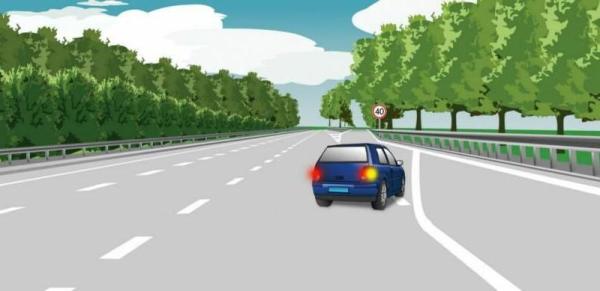
Answer:Y
Previous question: 49. A driver can park the vehicle by borrowing the sidewalk if he cannot find the parking area.
2026年科目一英文版题库共973题,你可以免费查看前200题,完整版题库请添加微信购买:

The English version of the 2026 subject 1 question bank has a total of 973 questions. You can view the top 200 questions for free. Please add WeChat to purchase the complete version of the question bank.
Subject 1 test questions
- Registration alternation is not needed when _____
- When passing through an inundated road, the driver should ________.
- When a vehicle is being overtaken by another vehicle, the driver should _____.
- A motorized vehicle is not allowed to make a U turn at the level crossing, bridge, steep slope, tunnel or dangerous road section.
- When a vehicle reaches a muddy or burst-and-muddy section, the driver should stop,observe and select the level and solid section or the section with vehicle tracks.
- What is the max speed on the expressway when the visibility is lower than 200m?
- A motorized vehicle driver who escapes or commits other extremely serious acts after causing a major accident in violation of the traffic regulations is subject to a prison term of more than 7 years.
- When discovering a vehicle behind wanting to overtake while driving, the driver should _______.
- When driving in a rainy day, the driver should _____ when a pedestrian holding umbrella or in raincoat is walking on the highway.
- When a vehicle stops temporarily in a rainy day, the driver should turn on ______.
- Using the high and low beam lights alternately while driving on the road of this kind of sharp curve.
- Traffic Police can detain the vehicle according to law if it is without the mandatory traffic accident insurance in accordance with state regulations.
- Driving a motorized vehicle on the expressway is not allowed to exceed the marked maximum speed.
- When discovering the persons injured in a traffic accident need rescue while driving, the driver should _________.
- When driving a vehicle through an inundated road with non-motorized vehicles on both sides, the driver should _________.
- It is a bad habit for a driver to put his left arm on the window of the vehicle or hold the gear lever in his right hand for a long time.