
临汾驾考英文版科目一试题
2026年科目一英文版题库共973题,你可以免费查看随机20题,完整版题库请添加微信购买:

The English version of the 2026 subject 1 question bank has a total of 973 questions. You can view the top 20 questions for free. Please add WeChat to purchase the complete version of the question bank.
1. Driving a motorized vehicle on the road should be required to be with a license plate.
Answer: Y
2. After a vehicle enters the ramp, the driver should swiftly increase the speed to more than 60 kilometers per hour.
Answer: N
3. When running on an expressway that has four lanes in the same direction, the vehicles whose speed is higher than 110 kilometers per hour should run ______.
A. The far left lane
B. The second left lane
C. The far right lane
D. The third left lane
Answer: A
4. A driver may drive a motorized vehicle after the driving license has been lost within 3 months.
Answer: N
5. A front tire blowout is very dangerous. The vehicle will immediately turn to the side where the tire is blown out and have a direct impact on the drivers control of the steering wheel.
Answer: Y
6. When a vehicle has increased its speed to more than 60 kilometers per hour on the ramp of an expressway, it may directly enter the carriageway.
Answer: N
7. How the front vehicle to run in this situation?

A. run as normal
B. yield
C. turn on the hazard lights
D. should not change lane
Answer: B
8. What is the max speed limit on this road?
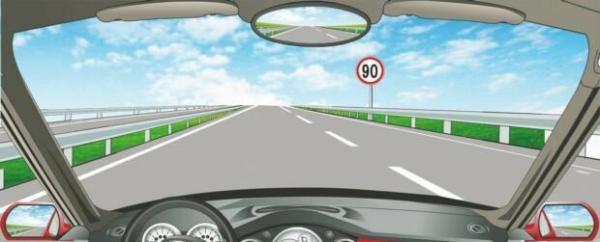
A. 100 km/hr
B. 90 km/hr
C. 120 km/hr
D. 110 km/hr
Answer: B
9. Which is correct in this kind of intersection?
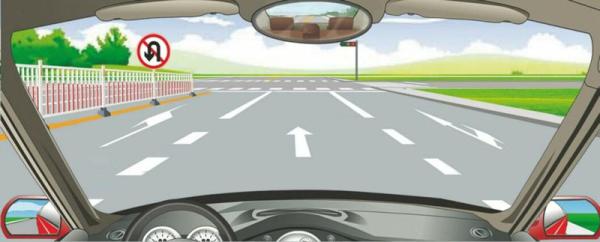
A. make a U turn along the left lane
B. cannot make a U turn
C. make a U turn through the middle lane
D. make a U turn inside the intersection
Answer: B
10. At this position, you may speed up to pass through the section.
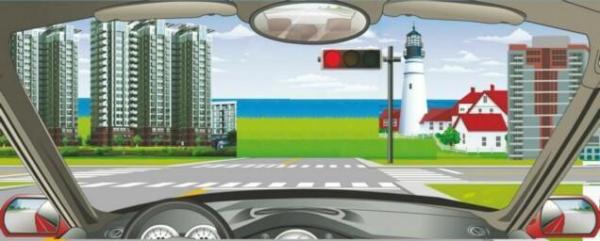
Answer: N
11. When discovering the persons injured in a traffic accident need rescue while driving, the driver should _________.
A. Send the injured persons to hospital in a timely manner or make emergency calls
B. Dodge as much as possible
C. Go ahead by bypassing the scene
D. Find an excuse to dodge the scene
Answer: A
12. How to drive in this section?

A. occupy the road of the other side to pass the curve
B. drive along the middle of the curve
C. speed up and honk to pass
D. reduce speed and honk
Answer: D
13. Registration alternation is not needed when _____
A. change engine
B. add anti-collision device
C. change vehicles colour
D. change the chassis
Answer: B
14. In such road sections, you can enter the cross-hatched marking area to wait.

Answer: N
15. If a driver has not received full penalty points, and the fine has not been paid, the penalty points will be transferred into the next scoring cycle.
Answer: Y
16. When the fire engine, ambulance and wrecker are executing an emergency task, other vehicles should yield.
Answer: Y
17. In this case, by the right side of the bus lane to overtake.
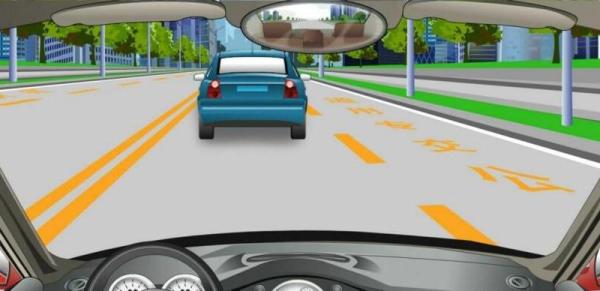
Answer: N
18. The wrong measure to avoid tire blowout is to _________.
A. Reduce tire pressure
B. Check the tires regularly
C. Remove objects from tire tread grooves in a timely manner
D. Replace the tire that has cracks or deep cuts
Answer: A
19. When driving a motorized vehicle uphill, you should speed up and honk when you going to reach the top of the slope.
Answer: N
20. When a vehicle approaches an intersection without crosswalk, the driver should _______ if he finds people are crossing the street.
A. Reduce speed or stop to yield
B. Honk to indicate them to yield
C. Immediately change lane and bypass the pedestrians
D. Pass before the pedestrians
Answer: A
Previous: 北海驾考英文版科目一试题
Next: 外国人国内考驾照需要什么