
贵阳驾考英文版科目一试题
2026年科目一英文版题库共973题,你可以免费查看随机20题,完整版题库请添加微信购买:

The English version of the 2026 subject 1 question bank has a total of 973 questions. You can view the top 20 questions for free. Please add WeChat to purchase the complete version of the question bank.
1. Before a motorized vehicle overtakes, the driver should turn on the left-turn signal, use the high and low beam lights alternately or honk in advance.
Answer: Y
2. The main impact of rainy weather on safe driving is _______.
A. The road is wet and slippery and the visibility is poor
B. The engine is prone to stop
C. The resistance to the vehicle increases
D. The electric equipment is prone to getting wet and causing short circuit
Answer: A
3. When a vehicle starts up, the driver should observe the traffic conditions and begin to start up after making sure it is safe to do so.
Answer: Y
4. The main impact of muddy roads on safe driving is _________.
A. The resistance to the vehicle becomes weaker
B. The tires can easily spin and skid
C. The visibility become lower and blurs the field of vision
D. The road grip becomes stronger
Answer: B
5. Stopping temporarily on the road should not obstruct the passing of other vehicles and pedestrians.
Answer: Y
6. When driving in thick or extremely thick fog, the driver should ____ due to low visibility.
A. Turn on the head light and keep driving
B. Turn on the contour light, fog light and drive along the right side
C. Turn on the hazard lights and keep driving
D. Turn on the hazard lights, fog light, and stop at a safe place
Answer: D
7. Traffic signals include Traffic lights, Traffic signs and Command of the traffic police.
Answer: Y
8. How the front vehicle to run in this situation?

A. run as normal
B. yield
C. turn on the hazard lights
D. should not change lane
Answer: B
9. When encountering an ambulance rushing in the same lane in the opposite direction, the driver should ________.
A. Move to the road side, reduce speed or stop to yield
B. Drive on by using another lane
C. Speed up and change lane to avoid
D. Continue to go in the original lane
Answer: A
10. The motorized vehicle driver is not allowed to drive a motorized vehicle when his driving license is detained.
Answer: Y
11. A rear tire blowout can sway the tail of the vehicle. The driver should firmly hold the steering wheel with both hands to ensure the vehicle go straight, reduce speed and then stop.
Answer: Y
12. When starting up a vehicle stopping at the roadside, the driver should first ________.
A. Depress the accelerator pedal and start
B. Honk
C. Increase engine rotation speed
D. Observe the conditions around the vehicles
Answer: D
13. What is the max speed limit on this road?
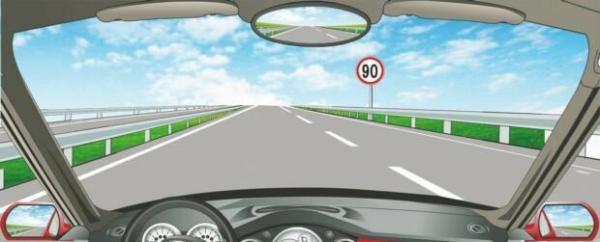
A. 100 km/hr
B. 90 km/hr
C. 120 km/hr
D. 110 km/hr
Answer: B
14. Driving a small passenger vehicle on the expressway, the minimum speed should not be less than 90 kilometers per hour.
Answer: N
15. When a vehicle changes to the right lane, the driver should turn on the right-turn signal in advance, observe and enter the new lane if it is safe to do so.
Answer: Y
16. When encountering a vehicle coming in the opposite direction on a mountain road, the driver should ______ when crossing each other.
A. Not reduce speed
B. Stick to the center of the road
C. Speed up
D. Reduce speed or stop to yield
Answer: D
17. When entering an expressway toll gate, the driver should select a gate where _______.
A. There are more vehicles
B. The red light is on
C. The green light is on
D. Service is temporarily suspended
Answer: C
18. When a vehicle goes downhill, it may fully use the neutral gear and slide.
Answer: N
19. Driving a motorized vehicle on the road in violation of road traffic regulations shall be subject to relevant punishment.
Answer: Y
20. You can make an U turn at this intersection.
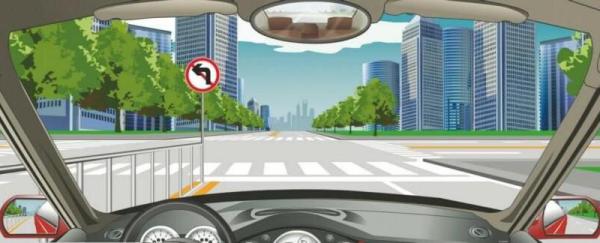
Answer: N
Previous: 陕西驾考英文版科目一试题
Next: 双鸭山外国人考中国驾照英语版