
潍坊摩托车科目四英文题和答案
2026年摩托车科目四英文版题库共345题,你可以免费查看随机20题,完整版题库请添加微信购买:

The English version of the 2026 Motorcycle subject 4 question bank has a total of 700 questions. You can view the top 20 questions for free. Please add WeChat to purchase the complete version of the question bank.
1. Gun powder, explosives and detonating powder belong to which of the following dangerous chemicals?
A. Oxidizing materials
B. Inflammable solid materials
C. Explosives
D. Self-igniting articles
Answer: C
2. What is the meaning of this sign?
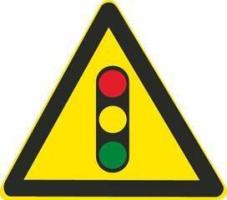
A. Crosswalk lights
B. Watch for pedestrians
C. Attention to traffic lights
D. Intersection
Answer: C
3. What is the meaning of this sign?
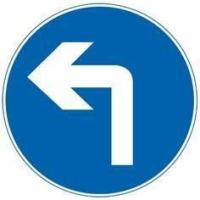
A. Turn left
B. No going straight
C. Straight-going lane
D. One-way road
Answer: A
4. What is the meaning of this sign?
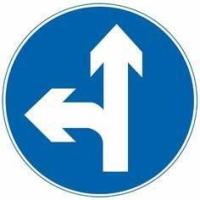
A. Going straight and right turn
B. Going straight and left turn
C. No going straight and no left turn
D. Right turn and left turn only
Answer: B
5. What should be done by the driver who intends to overtake but finds that the vehicle in front is also overtaking?
A. Following the vehicle in front closely and finding a chance to overtake it
B. Accelerating to overtake forcefully
C. Continuously sounding the horn to urge the vehicle in front to yield
D. Refraining from overtaking and letting the vehicle in front overtake first
Answer: D
6. How should lamps be used when motor vehicle drivers pass through a two-way tunnel?
A. Turn on the hazard lamps
B. Turn on the high-beam
C. Turn on the fog lamp
D. Turn on the low-beam
Answer: D
7. When rescuing the persons who are losing blood, it is necessary to ______ first.
A. Observe
B. Dress the wounds
C. Stop bleeding
D. Inquire
Answer: C
8. What kind of harmful effect will be brought about by continuously using the foot brake on a long downhill road?
A. Shorten the engine¡¯s service life
B. Make the driver feel tired
C. Easily cause the vehicle to overturn
D. Reduce the braking efficiency
Answer: D
9. Dangerous chemicals possess the characteristics of explosion, inflammation, poison, erosion and radiation.
Answer: Y
10. When approaching a vehicle on a narrow slope, which one of the following ways is correct?
A. The descending vehicle yields to the ascending
B. The vehicle which is further from the slope crest should yield
C. The ascending vehicle yields to the descending
D. If the descending vehicle has reached the midpoint while the ascending vehicle has not yet set out, the descending vehicle must yield.
Answer: A
11. How will the adhesive force of road change when speed increases on a damp and slippery road?
A. Increase sharply
B. Increase gradually
C. Decrease sharply
D. No change
Answer: C
12. What is the meaning of this sign?

A. Accident-prone section
B. Construction section
C. Reducing speed and going slowly section
D. Jammed section
Answer: A
13. When rescuing a wounded person suffering spinal fracture, it is necessary to ___________.
A. Take warm-keeping measure
B. Use soft stretcher to carry
C. Use sling to keep in position
D. Help the wounded person to move
Answer: C
14. When putting out a fire disaster that gives out erosive steam or poisonous gas, the firefighters should wear gas masks and other related protective articles and should operate from the windward side.
Answer: Y
15. What is the meaning of this sign?

A. Slippery section
B. Sharp curve
C. Inverse curve
D. Continuous curves
Answer: C
16. When a wounded person suffering burns is thirsty, he should only drink plain boiled water.
Answer: N
17. When following other vehicles on a foggy day, what should the driver do?
A. Maintain a large safety distance
B. Turn on the high-beam
C. Turn on the low-bea
D. Sound the horn in due time
Answer: A
18. When rescuing a wounded person suffering from bone fracture, which of the following should be kept in mind?
A. Immediately send him/her to the hospital on a stretcher
B. Properly change the original posture when the injured person wounded
C. Dress the fracture with a bandage
D. Do not move the fractured body-part
Answer: D
19. When a wounded person suffering bone fracture in the thigh, shank and spine, it is necessary to keep the fracture in position and refrain to move the wounded person.
Answer: Y
20. When using splints, sticks or tree branches to keep the unexposed bones in position, it is necessary that these things should exceed the upper and lower joints of the wound.
Answer: Y
Previous: 太原考摩托车科目一英文版app
Next: 大连摩托车科目一英语版