
齐齐哈尔摩托车科目四英文版试题
2026年摩托车科目四英文版题库共345题,你可以免费查看随机20题,完整版题库请添加微信购买:

The English version of the 2026 Motorcycle subject 4 question bank has a total of 700 questions. You can view the top 20 questions for free. Please add WeChat to purchase the complete version of the question bank.
1. What is the meaning of this sign?
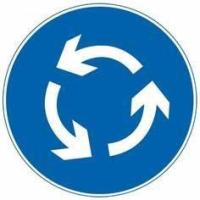
A. Passing by the right side
B. Passing by the left side
C. Running to right side
D. Running the roundabout
Answer: D
2. What is the meaning of this sign?
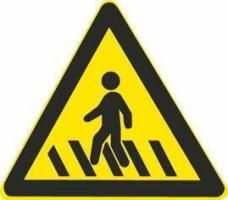
A. Watch for pedestrians
B. Watch for children
C. School area
D. Crosswalk
Answer: A
3. When rescuing a wounded person in an emergency, it is necessary to firstly stop the bleeding by compression before other methods are taken according to the conditions of bleeding.
Answer: Y
4. What is the meaning of this sign?
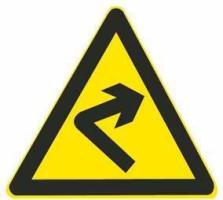
A. Sharp right curve
B. Bypass from right side
C. Continuous curves
D. Sharp left curve
Answer: A
5. What is the meaning of this sign?
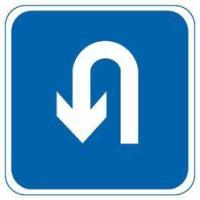
A. U turn
B. Reversing
C. Left turn
D. Bypassing
Answer: A
6. What is the meaning of this sign?
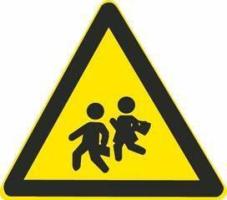
A. School area
B. Watch for children
C. Crosswalk
D. Watch for pedestrians
Answer: B
7. When driving on a long downhill road, which is the best way to control the speed?
A. Coast in neutral gear
B. Take a low gear
C. Depress the clutch
D. Pull up the handbrake
Answer: B
8. When evading an emergency, except for being calm what principle should be held by drivers?
A. Evading people first and then objects
B. Evading objects first and then vehicles
C. Evading vehicles first and then people
D. Evading objects first and then people
Answer: A
9. What is the meaning of this sign?
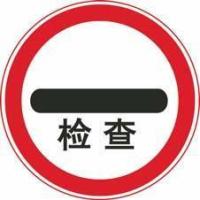
A. Customs inspection
B. Stop-for-inspection
C. Frontier inspection
D. No passing
Answer: B
10. What is the meaning of this sign?
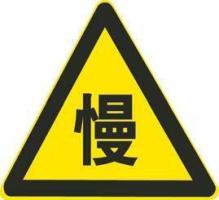
A. More vehicles section
B. Passing slowly
C. Jammed section
D. Construction section
Answer: B
11. What is the meaning of this sign?
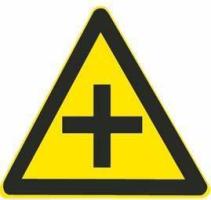
A. Intersection
B. Ring intersection
C. T-shaped intersection
D. Y-shaped intersection
Answer: A
12. What should be checked before driving?
A. No parts need to be checked
B. Whether the tires have been cleaned
C. Where the spare tire is placed
D. The fastening and air pressure of tires
Answer: D
13. What is the meaning of this sign?
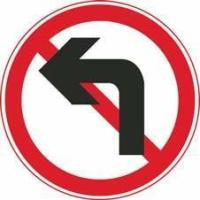
A. No U turn
B. No changing to left lane
C. No turning left
D. No entering the left lane
Answer: C
14. What is the meaning of this sign?

A. Stop by the left side of the road
B. Downhill section left
C. Left turn only
D. Run by the left side of the road
Answer: D
15. When encountering a vehicle in front ascending on a mountainous road covered with ice and snow, what should the motor vehicle driver do?
A. Ascend after the vehicle in front passes the slope
B. Overtake the vehicle in front swiftly and drive on
C. Overtake the vehicle in front with a slow speed and drive on
D. Follow the vehicle in front closely
Answer: A
16. What should the driver do when he/she encounters an oncoming ambulance in the same lane?
A. Keep to the side and reduce speed or stop to yield
B. Drive ahead by occupying another lane
C. Yield by speeding up and changing lanes
D. Drive ahead in the original lane
Answer: A
17. What is the meaning of this sign?
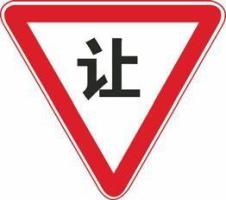
A. No yielding
B. Yield while crossing each other
C. Reduce speed and yield
D. Stop to yield
Answer: C
18. The wrong method to rescue a poisoned person in a traffic accident is to ______.
A. Bring him to a place where air is fresh
B. Take off clothes that are exposed to toxic air
C. Clean exposed areas with clean water
D. Stay in the original place and wait for the rescue personnel
Answer: D
19. When rescuing a wounded person in coma, it is necessary to take warm-keeping measures to prevent heat loss.
Answer: Y
20. Dangerous chemicals possess the characteristics of explosion, inflammation, poison, erosion and radiation.
Answer: Y
Previous: 莆田考摩托车科目一英文版
Next: 珠海考摩托车科目四英文试题