
珠海摩托车科目四英文考试题库
2026年摩托车科目四英文版题库共345题,你可以免费查看随机20题,完整版题库请添加微信购买:

The English version of the 2026 Motorcycle subject 4 question bank has a total of 700 questions. You can view the top 20 questions for free. Please add WeChat to purchase the complete version of the question bank.
1. When there is bleeding at the bone fracture of a wounded person, the first thing to do is to keep it in position before stopping the bleeding and dress the wound.
Answer: N
2. What is the meaning of this sign?
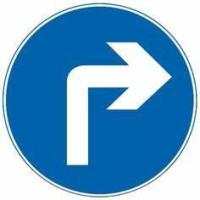
A. Turn right
B. One-way road
C. Going straight only
D. Straight-going lane
Answer: A
3. When a motor vehicle stops in snow, which lamp should be turned on?
A. Front and rear fog lamps, clearance lamp and rear position lamp
B. Reverse lamp, clearance lamp and rear position lamp
C. Headlamp, clearance lamp and rear position lamp
D. Hazard lamps, clearance lamp and rear position lamp
Answer: D
4. What is the meaning of this sign?
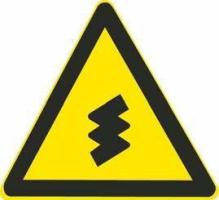
A. Slippery section
B. Sharp curve
C. Inverse curve
D. Continuous curves
Answer: D
5. Rescue personnel should check the breath of the unconscious person before applying any other emergency treatment.
Answer: Y
6. When a motor vehicle stops temporarily in a rainy day,which lamp should be turned on?
A. Front and rear fog lamps
B. Hazard lamps
C. Headlamps
D. Reverse lamps
Answer: B
7. The wrong method to rescue a poisoned person in a traffic accident is to ______.
A. Bring him to a place where air is fresh
B. Take off clothes that are exposed to toxic air
C. Clean exposed areas with clean water
D. Stay in the original place and wait for the rescue personnel
Answer: D
8. What should the driver do to follow other motor vehicles on a mountain road?
A. Closely follow the vehicle in front
B. Increase the safety distance
C. Reduce the vertical distance between vehicles
D. Try to overtake the vehicle in front as soon as possible
Answer: B
9. When a motor vehicle temporarily stops in fog, which lamp should be turned on?
A. Hazard lamp, clearance lamp and rear position lamp
B. Left-turn indicator, clearance lamp and rear position amp
C. Headlamp, clearance lamp and rear position lamp
D. Reverse lamp, clearance lamp and rear position lamp
Answer: A
10. What is the meaning of this sign?
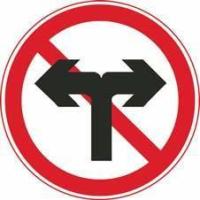
A. No U turn at intersection
B. No changing lane from both sides
C. No left or right turn
D. No going straight
Answer: C
11. What is the meaning of this sign?
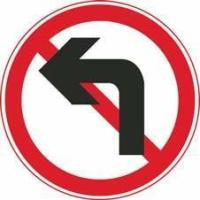
A. No U turn
B. No changing to left lane
C. No turning left
D. No entering the left lane
Answer: C
12. What is the meaning of this sign?
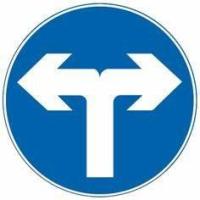
A. No left turn
B. Leftt and right turn
C. No leftt and right turn
D. No right turn
Answer: B
13. What should be done by the driver who intends to overtake but finds that the vehicle in front is also overtaking?
A. Following the vehicle in front closely and finding a chance to overtake it
B. Accelerating to overtake forcefully
C. Continuously sounding the horn to urge the vehicle in front to yield
D. Refraining from overtaking and letting the vehicle in front overtake first
Answer: D
14. Which lamp should be turned on when motor vehicles pass through a road section at night where the street light condition is good?
A. Front and rear fog lamps
B. Low-beam
C. High-beam
D. Hazard lamp
Answer: B
15. What is the meaning of this sign?
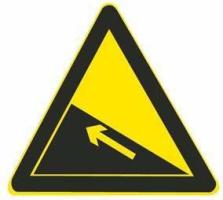
A. Steep downhill road
B. Continuous up slopes
C. Steep uphill road
D. Embankment road
Answer: C
16. How should lamps be used when motor vehicle drivers pass through a two-way tunnel?
A. Turn on the hazard lamps
B. Turn on the high-beam
C. Turn on the fog lamp
D. Turn on the low-beam
Answer: D
17. The article that cannot be used to stop bleeding by dressing is _________.
A. Bondage
B. Sling
C. Tourniquet
D. Hemp rope
Answer: D
18. How to reduce speed or stop when driving on a road covered with snow and ice?
A. Take full advantage of driving brake
B. Take full advantage of the control power from engine
C. Take full advantage of parking brake
D. Take full advantage of speed retarder
Answer: B
19. What is the meaning of this sign?
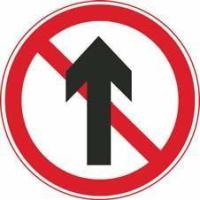
A. No right turn
B. No U turn
C. No going straight
D. No left turn
Answer: C
20. When driving on a long downhill road, which is the best way to control driving speed?
A. Coast in neutral gear
B. Depress the clutch and coast
C. Use the engine to brake
D. Depress the brake pedal continuously
Answer: C
Previous: 吉林市摩托车科目一英文版电子题库
Next: 泰安摩托车科目一英文考试题库